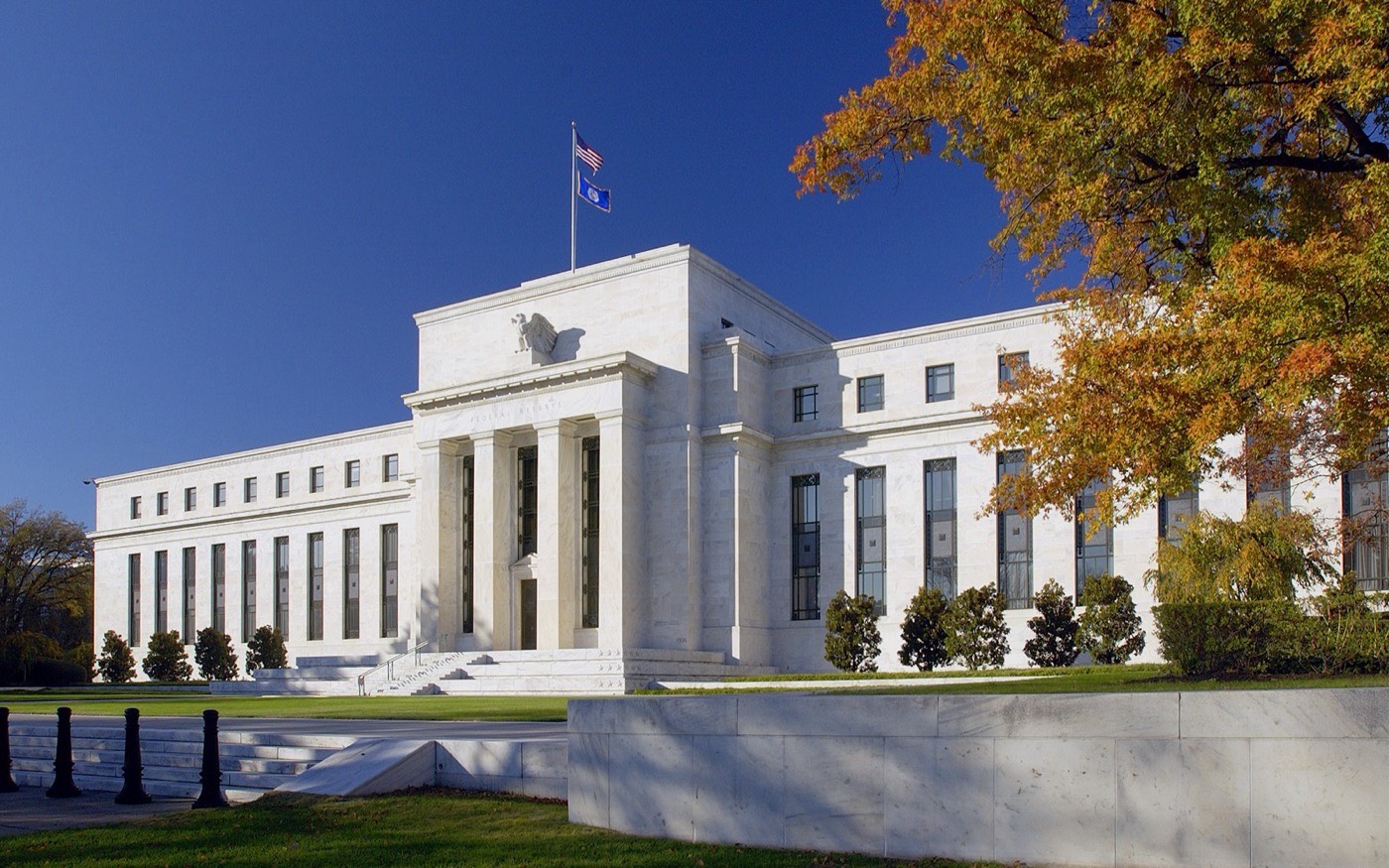
 The Federal Reserve's Eccles Building in Washington, where the FOMC meets. Photo: Federal Reserve
Support for tighter policy is building inside the Federal Reserve. Minutes of the October 27–28 Federal Open Market Committee meeting, released Wednesday, show that almost every participant believes rates will probably need to rise further in the coming months to bring inflation back to the 2% target in a timely way.
"[A]lmost all participants judged that, under their baseline outlooks for inflation and the labor market, further action to raise the target range for the federal funds rate—broadly consistent with the September Summary of Economic Projections—would likely be appropriate, in order to ensure a timely return of inflation to the 2 percent objective."
Two policymakers argued for a more aggressive path. An increase of "more than 25 basis points" could warrant consideration at the December meeting, they said, if incoming inflation data were unfavorable.
The breadth of support for higher rates is clear. How far and how fast is still open.
The Fed held rates in October by a 10–2 vote. Governor Lisa Cook and Cleveland Fed President Beth Hammack dissented in favor of a 25 basis-point hike. In September the Fed raised rates by 25 basis points, its first hike in three years.
A few officials who backed the hold called it a "close call." Others in the majority said market expectations of further hikes in December and into 2027 were "broadly consistent" with their own view of appropriate policy. Those expectations, they argued, reduced the risk of skipping a hike in October.
The divide isn't only over whether to hike, but over how the Fed signals what comes next. A few officials who favored an October hike said they could have supported a hold, provided markets clearly understood that more tightening was likely.
Officials split on size and signalling
Governor Christopher Waller made the case for faster tightening earlier on Wednesday. He told CNBC the Fed may need to "shock people" with a 50 basis-point hike in December. A quarter-point move would only do the job if the Fed signals clearly that another hike is coming in January; otherwise, he said, "you have to go 50 [basis points] in December to put it in place and get it done."
Others see the pace differently. San Francisco Fed President Mary Daly said Wednesday that the Fed should raise rates in a measured, steady way. Governor Michael Barr said further increases may be appropriate. New York Fed President John Williams on Tuesday dismissed the idea that the Fed needs to consider a large hike.
Rate futures now price 25 basis-point hikes in both December and January, and another in April. Investors have priced in months of tightening, but policymakers still differ on the size and timing of each step.
Inflation pressure versus a weak housing market
Inflation data have strengthened the case for hiking. October's consumer price figures showed price increases spreading to more everyday goods and services. Wholesale prices, part of which feed into the Fed's preferred inflation gauge, rose at their fastest annual pace since 2022.
But continued hikes would hit borrowing-dependent sectors hardest, housing above all. Data this week underlined the weakness: existing home sales fell to a 16-year low last month. That is one reason some officials want to move cautiously.
The October decision also came in the final days of the US midterm campaign. Fed Chair Kevin Warsh told reporters he heard no discussion of the election during the meeting.
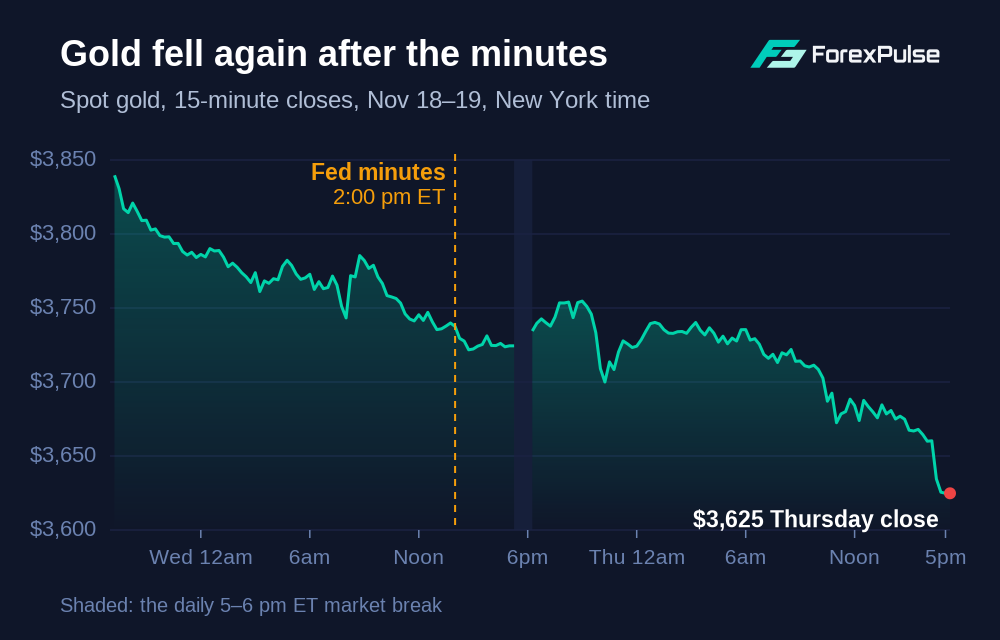 Gold was already sliding on Wednesday before the minutes. It dipped again after the 2:00 pm release and fell harder late on Thursday.
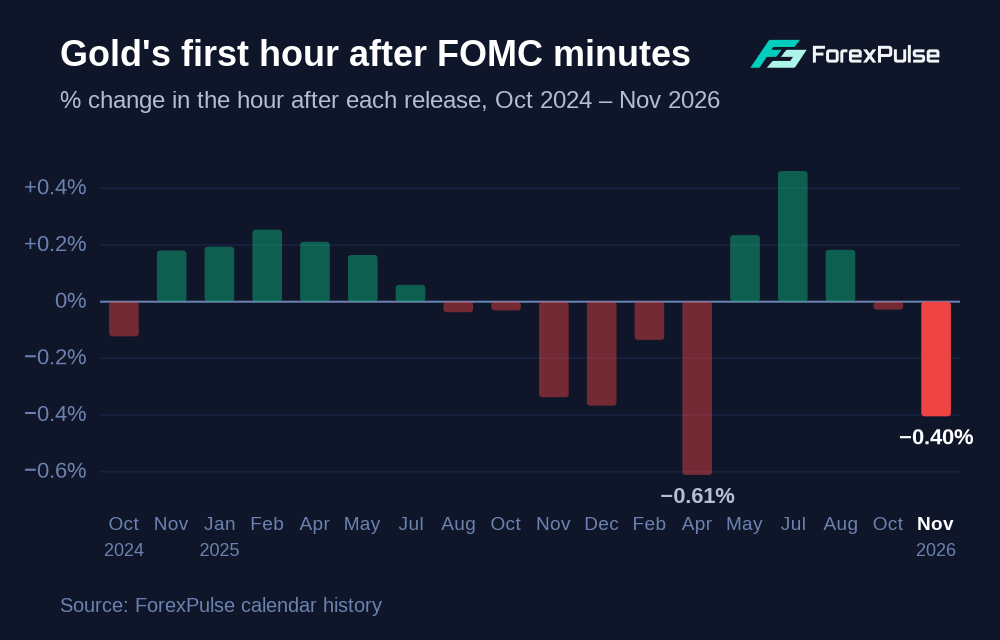 Gold's first-hour move after each of the last 18 sets of minutes. Ten of the 18 days ended lower.